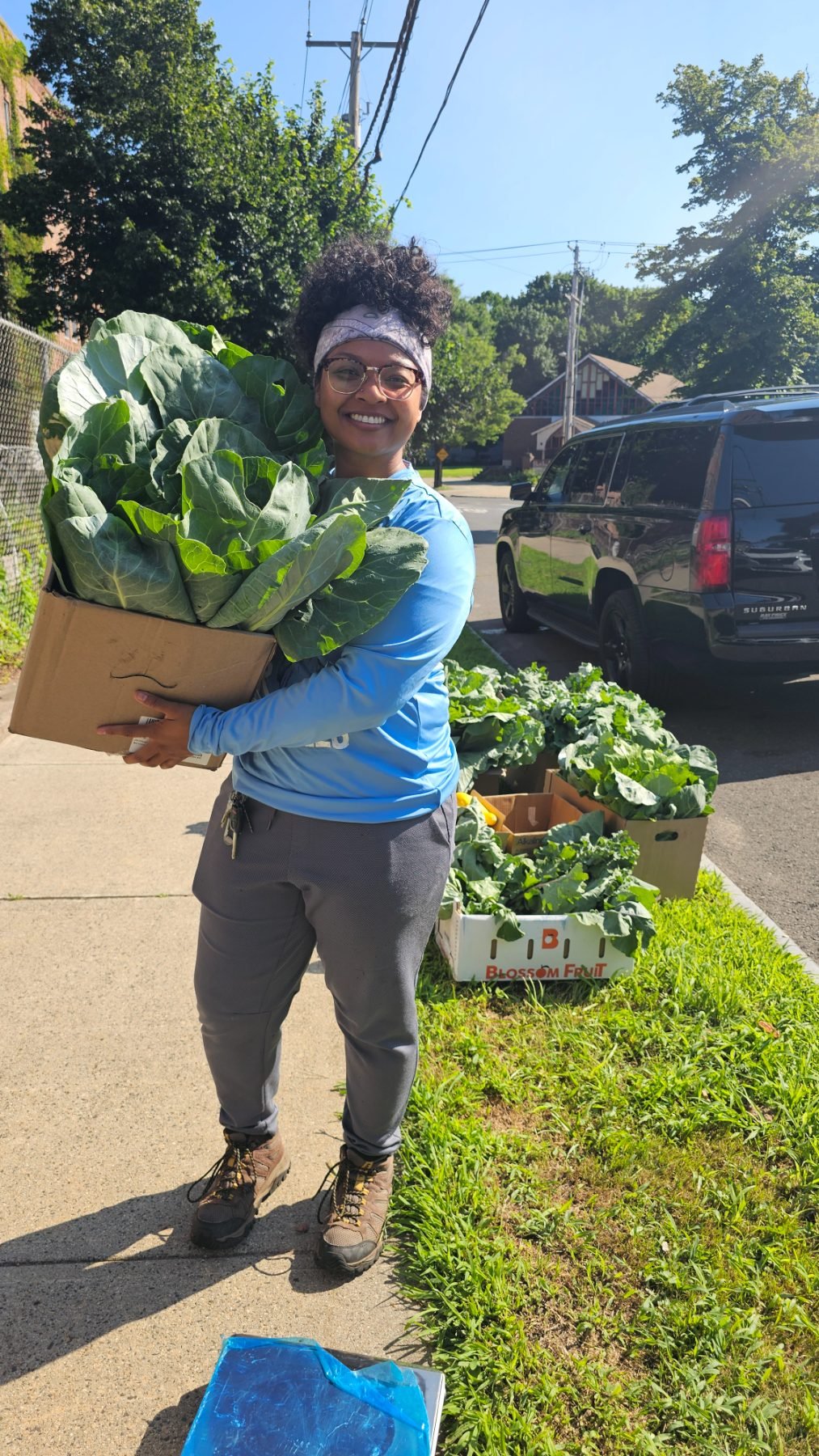
The Greater New Haven Black Food Hub & Producer Network · In development
A building is not a food system.
A cooler is not a market, and a Black neighborhood address is not community ownership. What Greater New Haven needs — and what Root Life, Liberated Land Cooperative, and the New Haven Black Farmers Collective are building — is infrastructure in the right order: buyers first, producers paid, workers owning equity, and a community that is never displaced by the very thing built to serve it.
Built from the published Food Hub Codex and Producer Network Codex — evidence-ranked, sequence-disciplined, and honest about what comes before a building.
Owned in layers, governed by many
The hub is a multi-stakeholder cooperative in the making: producers, workers, consumers, and community members each hold a membership class with real board seats and real votes — not advisory chairs. Land follows the anti-displacement path: no real-estate commitment in the early phases, a 3–5-year lease when revenue is proven, then a community land trust ground lease or cooperative purchase.
And because Root Life’s founder could sit on every side of the table, the safeguards are written down: firewall pricing (Root Life pays the same margin as any buyer), independent board seats, separately metered growing space, documented conflict disclosure, and succession rules that prevent single-founder capture.
How this connects to the worker pathway →
Holds the land
Property entity
Real-estate LLC or CLT-leased nonprofit — owns the building so no landlord ever owns the mission.
Runs the hub
Hub operating entity
Multi-stakeholder cooperative managing aggregation, fulfillment, and wholesale — producer, worker, consumer, and community member classes with real votes.
Owned by growers
Producer cooperative
Liberated Land Cooperative and network growers — sell through the hub, hold membership in it.
Anchor tenant — same rules as everyone
Root Life LLC
Anchor producer and CSA tenant. Firewall pricing, metered space, disclosed conflicts — an anchor, never a captor.
Each layer leases from the one above it — equity and control stay distributed by design.
