

{{ fv.title }}
{{ fv.blurb }}
{{ fv.label }}
Our Story · New Haven, Connecticut
Root Life is an Afro-Indigenous agricultural enterprise rooted in Greater New Haven — a farm, a school, a weekly harvest, and a wealth-building engine, run by people you can name.
We say it in three words: Eat the Sun.
Not a slogan about freshness. Photosynthesis is the only process on earth that turns light into food, and every plant our ancestors carried across an ocean was sunlight they had learned to store. We are in the business of shortening the distance between that light and a plate in New Haven.
Fresh food you can trust, rooted in a history worth knowing, grown by people you can name.
We never market Black pain more powerfully than Black possibility. Our story is people growing, cooking, teaching, building businesses, raising families, and practicing abundance — a future worth joining, built one weekly harvest at a time.
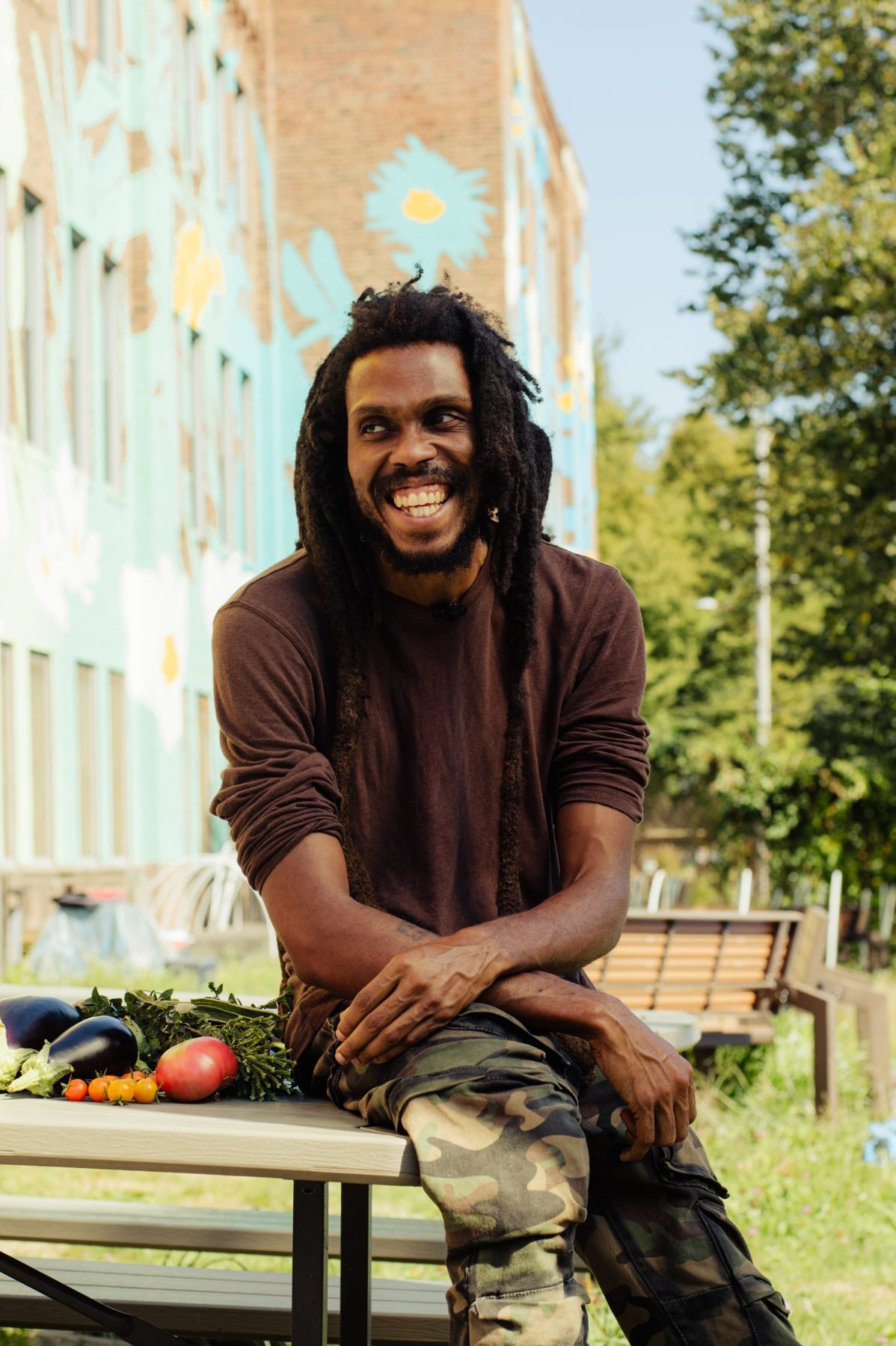
Farmer D · Founder, Root Life
For more than a decade Farmer D has worked where soil, culture, health, education and economic self-determination meet. The work goes past growing food: through Root Life he is building an ecosystem where fresh food becomes an entry point into agricultural knowledge, youth employment, entrepreneurship, cultural memory, environmental stewardship and stronger neighbourhood economies.
Thousands of young people and community members have come through this work — urban farming, hands-on agricultural education, garden development, cooking, entrepreneurship, media and food-system organising. The farm is more than a production site. It is a classroom, a laboratory, a gathering place, a healing landscape and an incubator for future farmers and community leaders.
He is also a media storyteller and documentarian, and that pairing shapes how Root Life works: every crop has biology, every seed has a history, every neighbourhood carries knowledge, and every harvest can tell a story.
Grow food. Grow knowledge.
Grow people. Grow power.
Where the share comes from
Community-supported agriculture in the United States is usually dated to 1986, to two farms in Massachusetts and New Hampshire, with roots in European biodynamic farming and Japanese teikei. That account is true. It is also incomplete.
A generation earlier, Black farmers and organizers in the American South were already building the same arrangement — members paying in advance, harvest going straight to the people who paid — and they were building it for a harder reason. Banks would not lend to them. Buyers would not pay them fairly. A membership was a way to farm without either.
Documented record
Dr. Booker T. Whatley · Tuskegee Institute, Alabama · promoted from the 1960s, published 1987
A horticulturist at Tuskegee designed a whole small-farm plan around membership. Households paid an annual fee up front, then came to the farm and picked their own food. He called the club “the lifeblood of the whole setup” — because it did two things at once: it guaranteed the market before a seed went in, and it let the farmer plan production against real demand.
The strategy, as he wrote it
Documented record
Fannie Lou Hamer · Sunflower County, Mississippi · founded 1969
A former sharecropper bought forty acres of Delta land with a ten-thousand-dollar donation, and another six hundred and forty the next year. People who had been fired and evicted for registering to vote needed food that no landlord controlled. So the cooperative grew food, and then it grew everything food sits next to.
The strategy, as it was built
It did not survive. Undercapitalized from the start and carried largely by Mrs. Hamer’s own fundraising, the farm folded in the late 1970s. We say so because the reason it failed — no institutional backing for a Black cooperative — is the part that has not changed, and it is the risk we are building against.
Paid before it is picked. Your share funds the cycle it belongs to, the way the club dues did. We say what the money does rather than leaving you to assume — how membership works.
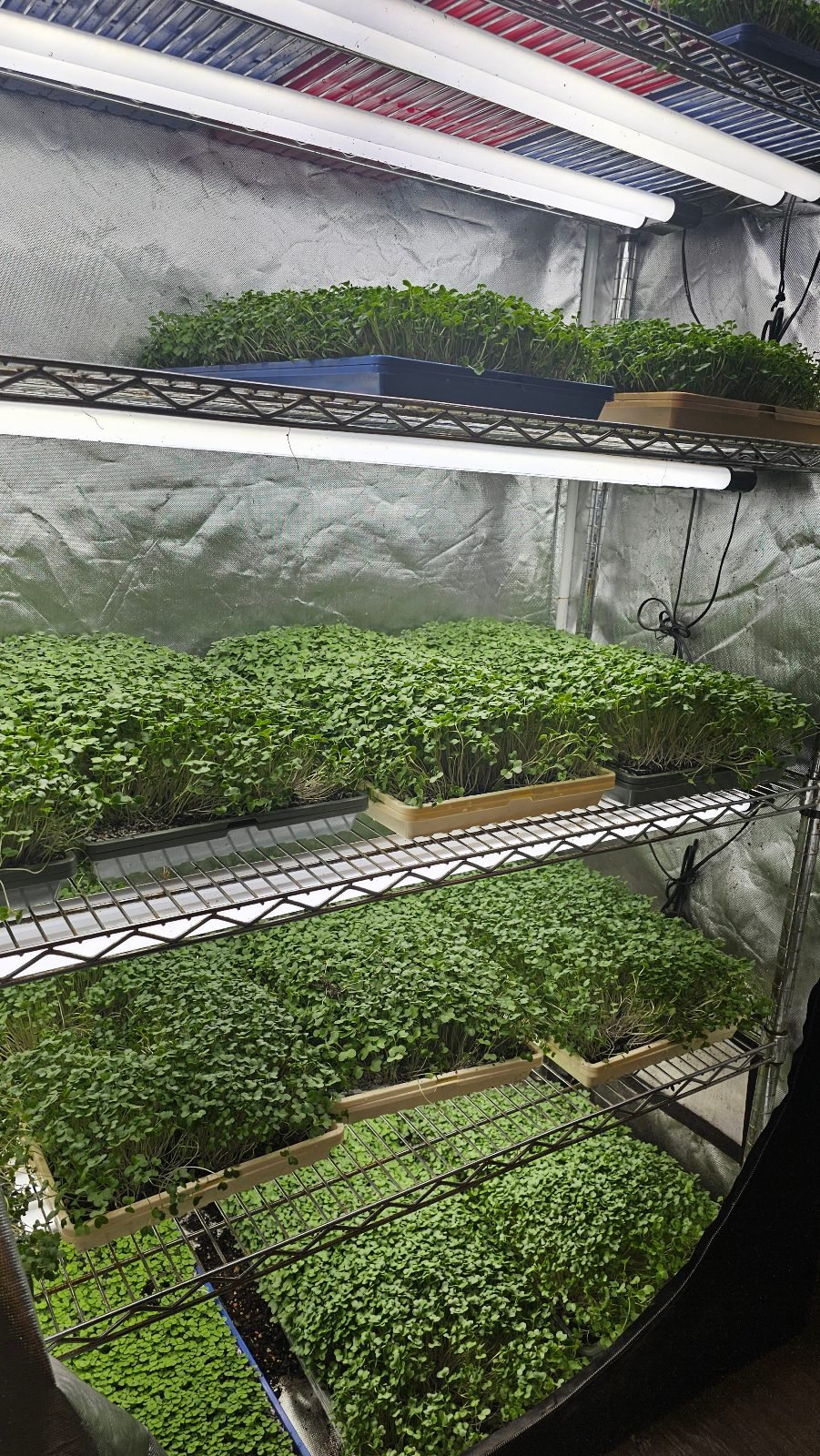
Many crops, every week. Whatley’s ten-crop rule solved for a season with no gaps. Our growing room harvests year-round for the same reason — this week’s harvest.
You come to the food. Pick-your-own was about labor, and also about knowing the ground. Collection at a site near you, and workdays open to members — where we grow.
Members, not beneficiaries. Freedom Farm was a cooperative, not a feeding program. Nobody here is a recipient of anything — the pathways in.
Fact, and our reading of it. The two records above — the Clientele Membership Club and Freedom Farm Cooperative — are documented: names, places, dates, acreage, and plans that were published in print. What we carried over is ours, not theirs. Neither Dr. Whatley nor Mrs. Hamer called this work a CSA, and we do not claim them as founders of Root Life. We name what we learned from them, which is a different and smaller claim.
Sources: Booker T. Whatley, How to Make $100,000 Farming 25 Acres (Rodale Press, 1987) and his 1982 Mother Earth News interview on the Small Farm Plan · Monica M. White, Freedom Farmers: Agricultural Resistance and the Black Freedom Movement (University of North Carolina Press, 2018) · SNCC Digital Gateway, Freedom Farm Cooperative. Membership-fee and discount figures reported for the Clientele Membership Club differ between sources, so none is quoted here. How we handle attribution
A decade of growing, told honestly — tap a chapter.
{{ chBody }}
Food sovereignty and regenerative practice — as daily work, not slogans.
{{ p.body }}
Cultural accountability runs through all of it: every cultural reference we publish names its people, place, time, source, and level of certainty. Original symbolic work is labeled a Root Life reflection — never borrowed doctrine. Read the Cultural Attribution Policy
Farms & Growing Spaces
Our controlled-environment growing room in New Haven harvests year-round — microgreens on living racks, mushrooms on our own blocks — while partner plots and community gardens across Greater New Haven carry the seasonal crops. Every space doubles as a classroom for the Youth Academy and adult cohorts.
Want to see it? Farm tours run monthly →
Our ecosystem
Our work sits inside a living network of farmers, land stewards, cultural workers, educators, funders, cooperatives, community institutions, movement organizations, international partners, and public agencies working toward food sovereignty, ecological restoration, economic self-determination, cultural continuity, and healthier communities.
{{ ecoTeaser }}
{{ fnNote }}
Covering food sovereignty, Black agricultural enterprise, or New Haven’s food economy? We’re glad to talk — and Farmer D speaks at conferences, schools, and institutions.
Two more pieces, full citations and notes for anyone quoting us are in the press kit.
Media & Speaking Inquiries
Root Life LLC · New Haven & Greater New Haven, CT
admin@rootlife.ag · 860-751-2634 — a person answers within one business day
Product concern? The lot code is on your container label — report it here, replacement or refund, your choice.